








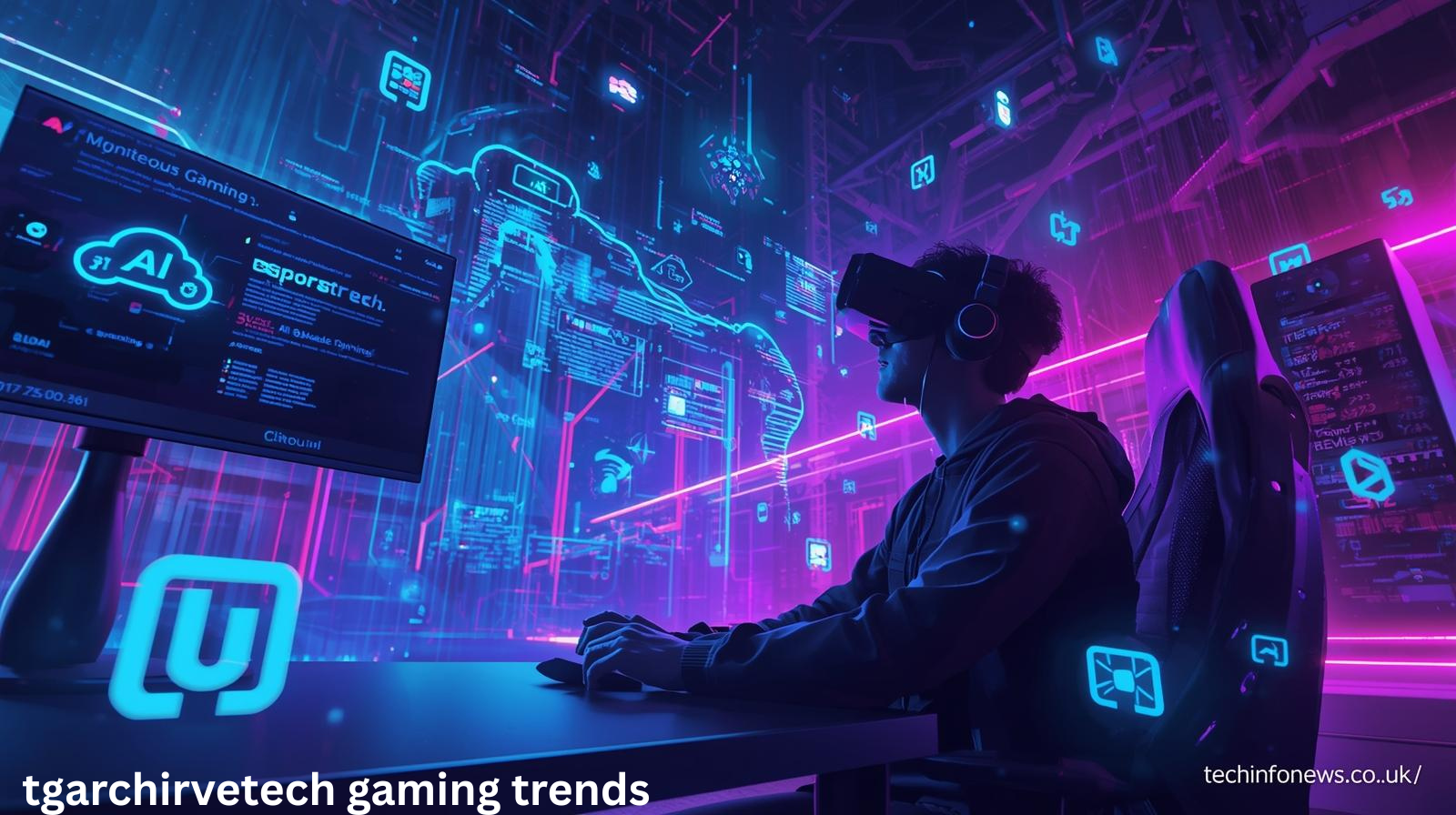
The phrase tgarchirvetech gaming trends represents a broader transformation happening across the global gaming industry. Over the past decade, gaming has evolved from a niche hobby into a multi-billion-dollar entertainment powerhouse driven by innovation, connectivity, and immersive design. These trends reflect how advanced technologies such as artificial intelligence, cloud computing, virtual reality, and blockchain are reshaping how games are developed, distributed, and experienced. Modern gamers no longer seek simple entertainment; they expect personalization, realism, cross-platform access, and interactive communities that extend beyond the screen.
What makes tgarchirvetech gaming trends especially significant is their focus on integration. Instead of isolated upgrades, today’s gaming ecosystem connects hardware advancements, software intelligence, and global online communities into one seamless experience. The rise of high-speed internet, 5G connectivity, and powerful graphics processing units has accelerated this evolution. As a result, developers can now create expansive digital worlds with real-time rendering, adaptive storytelling, and socially connected gameplay that would have been impossible just a few years ago.
Cloud Gaming and the Shift Toward Hardware Freedom
One of the most transformative elements of tgarchirvetech gaming trends is the rapid growth of cloud gaming technology. Traditionally, gamers needed expensive consoles or high-performance PCs to run graphically demanding titles. Cloud gaming changes this model by hosting games on remote servers and streaming them directly to users’ devices. This innovation reduces hardware limitations and makes premium gaming accessible on smartphones, tablets, laptops, and smart TVs.
The expansion of global data centers and improved internet infrastructure has significantly reduced latency, making cloud gaming smoother and more reliable. Edge computing further enhances performance by processing data closer to users, minimizing lag during competitive gameplay. This model not only improves accessibility but also changes the way games are purchased and distributed, with subscription-based services and digital libraries becoming increasingly common. As broadband access expands worldwide, cloud gaming is expected to play an even greater role in shaping the future of interactive entertainment.
Artificial Intelligence and Smarter Game Design
Artificial intelligence stands at the core of tgarchirvetech gaming trends, influencing both development processes and in-game experiences. AI-driven non-player characters now respond dynamically to player behavior, creating environments that feel responsive and lifelike. Instead of following repetitive patterns, modern NPCs adapt strategies, remember interactions, and react to changing in-game conditions, making gameplay more engaging and unpredictable.
Beyond character behavior, AI powers procedural generation systems that create unique maps, missions, and environments. This increases replay value while offering personalized experiences tailored to individual players. Machine learning algorithms also enhance matchmaking systems in multiplayer games, ensuring fair competition by pairing players with similar skill levels. Developers increasingly rely on predictive analytics and AI-based testing tools to optimize performance, detect bugs, and improve game balancing before release. These advancements demonstrate how intelligent systems are becoming fundamental to modern game innovation.
Immersive Technologies: Virtual Reality, Augmented Reality, and Beyond
Immersion is a defining feature of tgarchirvetech gaming trends, and technologies such as virtual reality and augmented reality are leading the way. Virtual reality allows players to step directly into digital environments, interacting with 3D worlds through motion tracking and advanced headsets. This level of immersion enhances emotional engagement and realism, making players feel physically present inside the game world.
Augmented reality blends digital elements with real-world surroundings, creating interactive experiences that extend beyond traditional screens. Mixed reality technologies take this concept even further by integrating physical and virtual objects in real time. These immersive gaming technologies are expanding into training simulations, educational tools, and social platforms, showing that gaming innovation is influencing industries far beyond entertainment. As hardware becomes more affordable and software optimization improves, immersive gaming experiences will likely become mainstream rather than niche.
Cross-Platform Connectivity and Community Expansion
Connectivity plays a central role in tgarchirvetech gaming trends, particularly through the rise of cross-platform gaming. In the past, players were restricted to competing only with others who owned the same console or device. Today, cross-platform integration enables gamers to play together regardless of whether they are using a PC, console, or mobile device. This approach fosters inclusivity and expands multiplayer communities worldwide.
Cross-platform functionality also strengthens long-term engagement. Players can maintain progress across devices, switch between platforms seamlessly, and interact with friends without technical barriers. This interconnected gaming ecosystem reflects a shift toward community-driven design, where social interaction is just as important as gameplay mechanics. By prioritizing shared experiences, developers ensure that gaming remains a collaborative and globally connected form of entertainment.
The Expansion of Esports and Competitive Gaming
Esports has become one of the fastest-growing sectors within tgarchirvetech gaming trends. Competitive gaming tournaments now attract millions of viewers online and fill large arenas with enthusiastic fans. Professional players train rigorously, supported by coaches, analysts, and performance specialists. This professionalization has elevated gaming into a legitimate career path, complete with sponsorships, endorsements, and structured leagues.
The growth of streaming platforms has amplified esports visibility, allowing fans to watch live competitions and interact with players in real time. Advanced analytics tools help teams study gameplay data, refine strategies, and optimize performance. As prize pools grow and media coverage expands, esports continues to blur the line between traditional sports and digital competition. This momentum demonstrates how gaming has evolved into a mainstream cultural phenomenon with global economic impact.
Blockchain Integration and Digital Ownership
Blockchain technology represents an emerging dimension of tgarchirvetech gaming trends. By using decentralized systems, developers can create secure digital economies where players truly own in-game assets. These assets may include skins, characters, collectibles, or virtual property stored on blockchain networks. Ownership can extend beyond a single game, allowing players to trade or transfer items across compatible platforms.
The concept of play-to-earn gaming has also gained attention, enabling players to earn digital tokens or rewards with real-world value. While regulatory considerations and market volatility remain challenges, blockchain introduces transparency and traceability to virtual economies. Developers exploring this space aim to create fairer systems where players have greater control over their digital investments. As the technology matures, blockchain could redefine how value is created and exchanged in gaming environments.
Mobile Gaming and Global Market Growth
Mobile gaming is a cornerstone of tgarchirvetech gaming trends due to its accessibility and massive global reach. Smartphones have evolved into powerful gaming devices capable of supporting high-quality graphics and real-time multiplayer interactions. This accessibility has introduced gaming to diverse demographics, including regions where traditional consoles may be less affordable.
The mobile gaming market benefits from microtransactions, in-app purchases, and free-to-play models that attract large user bases. Cloud synchronization ensures that progress can be shared across devices, while mobile controllers enhance gameplay precision. As mobile processors continue to improve, developers are creating increasingly complex and visually stunning games tailored for handheld devices. This portability revolution ensures that gaming remains available anytime and anywhere, expanding the industry’s influence worldwide.
Streaming Culture and Content Creation Influence
Content creation and game streaming are powerful forces within tgarchirvetech gaming trends. Platforms dedicated to live streaming allow players to broadcast gameplay to global audiences, building communities around shared interests and personalities. Viewers engage through comments, donations, and subscriptions, transforming gaming into a participatory entertainment experience.
Game developers increasingly collaborate with influencers and streamers to promote new releases and gather real-time feedback. This relationship strengthens transparency and builds trust between creators and players. User-generated content, including mods and custom maps, further enhances community involvement. By empowering players to become creators, the industry nurtures innovation and sustains long-term engagement across diverse audiences.
The Future Outlook of Tgarchirvetech Gaming Trends
Looking ahead, tgarchirvetech gaming trends point toward a future defined by intelligent systems, immersive environments, and interconnected digital societies. Advancements in artificial intelligence, real-time rendering, and spatial computing will likely produce hyper-realistic worlds that blur the boundary between physical and digital experiences. Social integration may deepen further, transforming games into shared virtual spaces for work, learning, and entertainment.
Sustainability and ethical development will also shape the industry’s direction. Developers are increasingly focused on responsible data use, inclusive design, and environmental considerations in hardware production. As technology continues to evolve, the gaming industry stands at the forefront of digital innovation. Tgarchirvetech gaming trends are not just temporary shifts but indicators of a broader transformation redefining how people connect, compete, and create in the digital age.
Read More:Understanding FintechAsia Error Codes an FintechAsia error codesd Why They Matter